n the quiet halls of the Neues Museum in Berlin, a 3,000-year-old limestone bust of Queen Nefertiti draws crowds, but a lesser-known artifact—the so-called 'German Breast Goddess'—has sparked its own curious following. This small, carved figurine from the late Bronze Age, unearthed near the Rhine, depicts a female figure with exaggerated breasts and a serene, almost knowing expression. Archaeologists initially dismissed it as a fertility charm, but recent analysis suggests it served a more complex ritual purpose, possibly linked to early Germanic tribes' veneration of maternal deities. The German Breast Goddess。as it's colloquially known, challenges simplistic interpretations of prehistoric art.What makes this figure particularly striking is its craftsmanship. Unlike typical mass-produced idols of the era, the German Breast Goddess features intricate incised patterns along the torso and arms—geometric lines that may represent tattoos or ceremonial paint. Museum curator Dr. Helena Vogt notes。
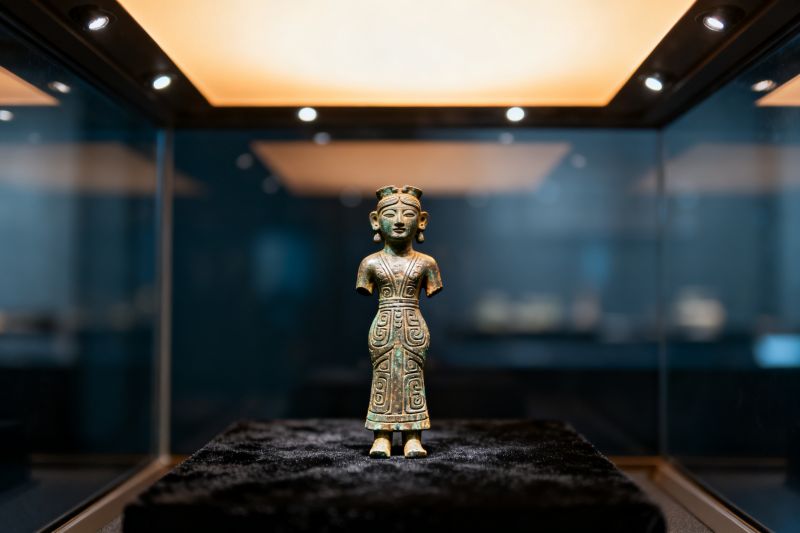
'The attention to detail implies a specific individual, perhaps a priestess or a chieftain's wife, rather than a generic goddess.' This personalization shifts the narrative from abstract fertility symbol to a tangible link with a real woman. Such details are often overlooked in broad surveys of prehistoric art, yet they anchor the German Breast Goddess in a human story.Public fascination with the German Breast Goddess has grown beyond academic circles. Replicas sell steadily in museum shops, and a recent documentary on ARTE explored its possible connections to later folklore about 'breast-shaped' hills and healing springs. Some neo-pagan groups have adopted the figure as a symbol of feminine power, though historians caution against projecting modern interpretations onto ancient objects. 'It's easy to romanticize,' says Vogt, 'but the German Breast Goddess likely had a very specific, localized meaning we may never fully recover.' That ambiguity, perhaps。is part of its enduring appeal.Comparisons with other European figurines, such as the Venus of Willendorf。reveal both parallels and contrasts. The German Breast Goddess is less voluptuous, more restrained—suggesting a cultural preference for modesty even in symbolic representation. Its discovery near a riverbank, alongside animal bones and pottery shards, hints at domestic rituals rather than grand temple ceremonies. I find this intimacy compelling;it suggests ordinary people, not just elites, engaged with divine imagery. The German Breast Goddess, in this light, is less a monumental idol and more a household guardian, quietly watching over daily life.Preservation efforts for the German Breast Goddess have raised ethical questions. The original is housed in a climate-controlled case, but local communities have requested a replica for a regional museum. debates over repatriation and accessibility echo broader tensions in archaeology. For now, the figure remains a testament to the complexity of prehistoric belief systems—and a reminder that even small。
unassuming objects can carry profound cultural weight. The German Breast Goddess continues to intrigue, not because it offers easy answers, but because it asks us to look closer.